

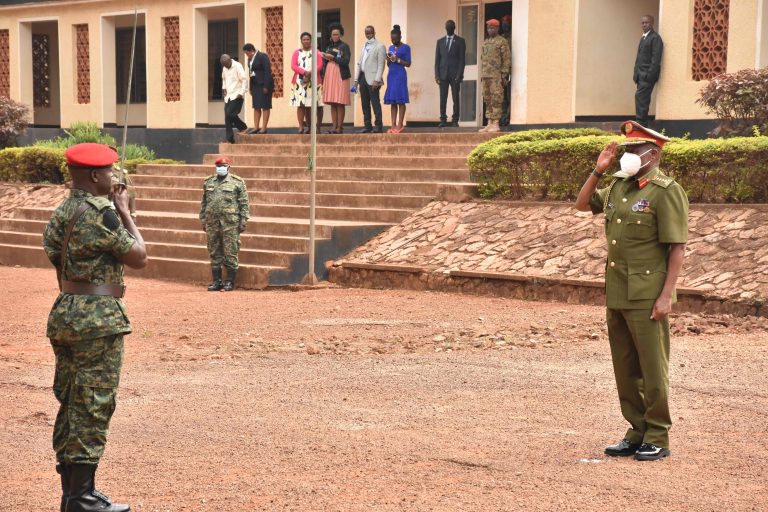
Only 60 case files have so far been formally received by the Office of the Director of Public Prosecutions (ODPP) from the General Court Martial, nearly a year after the Supreme Court outlawed the trial of civilians in military courts.
According to ODPP spokesperson Jacquelyn Okui, of the 60 files transmitted following the landmark ruling delivered on January 31, 2025, only two cases have progressed to the stage of being formally presented before civilian courts. Among them is the case involving opposition figure Dr Kizza Besigye.
The remaining files, Okui says, were returned to the police to address evidentiary gaps before prosecutorial decisions can be made.
“The case files were perused and sent to the police to conduct investigations,” Okui told Nile Post, explaining that the process has involved continuous back-and-forth between the ODPP and investigators.
She noted that in some instances, the ODPP directs police on specific lines of inquiry, but investigators may not complete all the requested actions for various reasons, prompting further review and resubmission of files.
“We sometimes find it pertinent to send back the same files to them to do certain other kinds of investigations to cover some areas which we think should be addressed before a decision is made,” she said.
The Supreme Court ruling directed that all civilians previously arraigned before the General Court Martial be transferred to competent civilian courts for trial, placing the responsibility for initiating that transition squarely on the DPP.
However, despite the clarity of the ruling, none of the affected individuals has yet been fully re-arraigned before an ordinary court following fresh charges framed under civilian jurisdiction. Many remain on remand, their cases effectively stalled.
City lawyer George Musisi argues that the continued detention of suspects without formally instituted civilian charges raises constitutional concerns.
“As it is now, they are not held on any lawful charge, which is something that our Constitution did not envisage. Our Constitution only envisaged a person being in prison either on remand or as a convict, which is not the case here,” Musisi said in an interview.
The Judiciary, on its part, maintains that it cannot act in the absence of formally presented charges. Judiciary spokesperson Justice Ereemye James Mawanda told Nile Post that the mandate lies with the prosecuting authority.
“The mandate was with the DPP to get those files, study them, determine who falls within the ambit of the decision of the Supreme Court, and take the necessary action,” Mawanda said.
The ODPP says a special internal review mechanism was constituted to scrutinise the transferred files and that announcements on the next course of action will be made once due process is satisfied.
For families of the accused, however, the wait continues, as dozens of cases remain suspended between jurisdictions — no longer under military authority, yet not fully absorbed into the civilian justice system.
